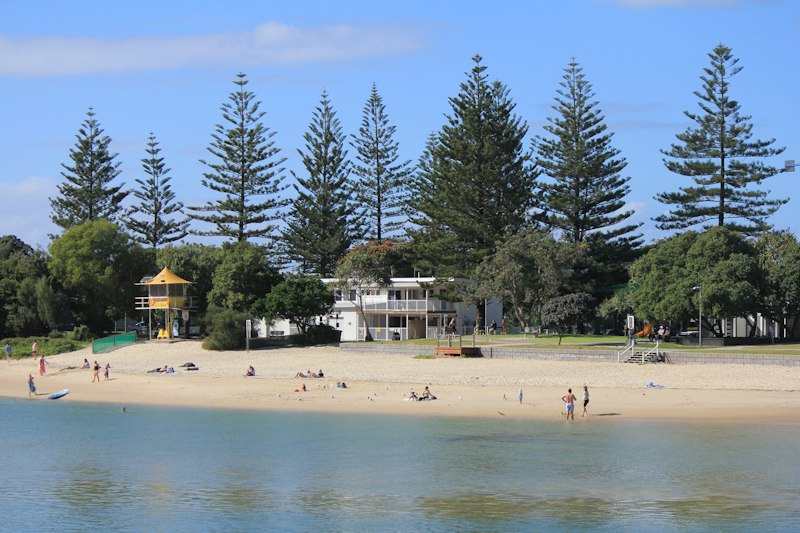
Here's the thing nobody tells you before your first session: the first wave you paddle out for doesn't have to be the first wave that works. Tallebudgera is one of the most beginner-friendly breaks on the Gold Coast, and a lot of that is down to its shape. It's a right-pointing beach break — the wave peels long, predictable and forgiving along the sand, and the reef edge makes the section reset cleanly. It's consistent, yes. Huge? No. For a beginner, that's exactly what you want: a wave that doesn't hit before it gets to you, a section that stays manageable, and a beach you can lie on and breathe after your heart rate does something embarrassing.
A break that forgives
Most visitors arrive with a mental image of the big-wave movies, and that image is the enemy. Tallebudgera on a typical day is a clean, rolling beach break with a sand bottom and a reef edge that shows on low tides. The sets come in around the cove and peel along to the right. On flat days the whole break is glassy; on big days it gets thick near the reef, and the beach side is the one you want. A good rule of thumb: if the waves are breaking all the way up to the rocks, the beach side of the break is where beginners belong.
Bring your own board? Rent one instead. The schools and surf shops around the beach carpark run a steady supply of longboards and soft-tops, and a soft-top is exactly what you want for the first few sessions — it's forgiving when you fall on it, which you will. A longboard over 8 feet is the board for your first day: more buoyancy, easier to stand on, and it catches the small waves that a shortboard would ignore.
The Kit
What to Bring
Wetsuit
You can hire a wetsuit at the surf schools and shops around the beach carpark. A 4/3mm is the right thickness for most of the year; in the warm summer months a 3/2mm is more comfortable. Try it on — a wetsuit that pinches will make you quit an hour early, and the wrong size is the most common reason beginners come back cold and grumpy.
Board
The schools and hire shops on the beach run longboards and soft-tops by the day. A soft-top is the one to rent: forgiving when you fall on it, and the only board that makes falling feel like part of the plan rather than the end of it.
Sunscreen, Hat, Warm Change
You'll be in and out of the water all morning and you won't reapply sunscreen once you're wet. Apply 20 minutes before you leave, reapply after the session, and take a fresh tube for the afternoon. A dry t-shirt, a hat and a towel make the difference between a full day and a half one — the air off the water is cooler than it looks.
Timing
When to Paddle Out
Mid-morning is the window. Between 9:30 and 11:30, the wind is lightest, the swell is usually the previous night's rather than something fresh, and the water is at its calmest. Early morning is beautiful but can be choppy after a southerly overnight; late afternoon is when the wind picks up and the wave gets messy. If you only have one window, take the mid-morning one — it's the cleanest, the lightest on the wind, and the one where your first standing wave is most likely to happen on the first paddle, not the ninth.
Don't Skip This
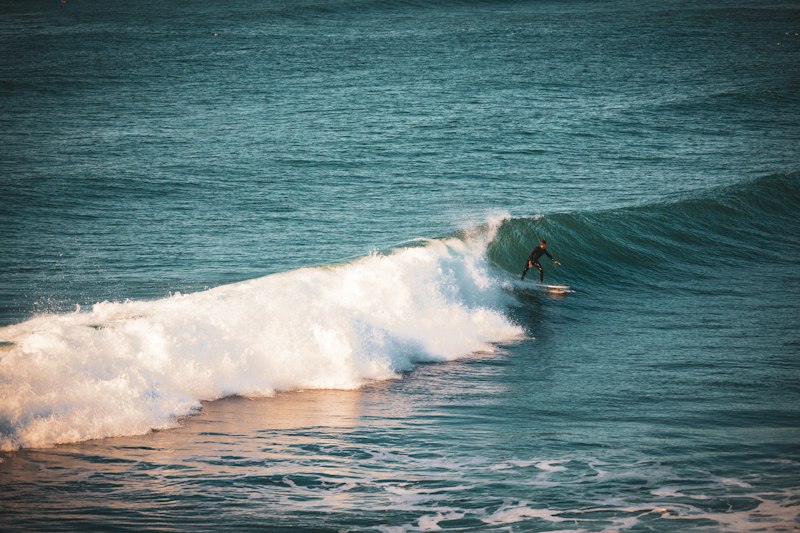
Several schools operate from the beach carpark at Tallebudgera — you'll see them along the beach on any morning, all running similar beginner courses: thirty minutes on the sand, an hour or two on the water in a longboard or soft-top, and a wetsuit for the day. A two-hour beginner course is usually all you need for your first wave. A good school will put you in the small sections, keep you in a small group, and keep you on the beach side of the break. That's the difference between "I got a wave" and "I got four waves and now I'm grinning like an idiot." Book it for the morning — the mid-morning window is the one everyone's after, and the good spots go early.
Safety
Three Things That Decide Your Day
Don't Fight It
If you get pulled past the breaking, don't fight it. Swim parallel to the beach until you're out of the current, then angle back in over the breaking. Rip currents pull you away from the beach — they never pull you under, and swimming hard straight for the shore is the one thing that turns a pull into a problem.
Stay On The Beach Side
The reef is real on low tides and it's sharp. Stay to the beach side if you're unsure where it is, don't walk or run into the water, and if you're snorkelling, put a board under your feet when you're moving. The reef rewards patience and punishes the first five minutes of any session.
Reapply
You will get sunburned if you don't reapply sunscreen, and the water hides how fast it happens. The basics do the rest: swim between the flags (they move with the swell), never paddle out alone on your first time, and if in doubt, don't. The flags are there for a reason, and so are the life guards.
Not Into Surfing?
The Reef Is the Other Reason to Be Here
Surfing is one of two good reasons to be on Tallebudgera's sand. The other is the reef. Tallebudgera Reef is a 3km stretch of outer and inner reef, and it's one of the best snorkelling on the Gold Coast — turtle, reef sharks (harmless, and the best part), and a fish count that surprises people who've only ever snorkelled in a tank. Hire a snorkel at the same shop where you'd have rented the board, put on a wetsuit if it's a cool morning, and swim the inner reef on a mid-tide. If the break is too busy on a big day, the inner reef is your answer — the same water, a different way in.
After the Session
Ice Cream, Coffee, and the Walk to Kirra
The session ends, the ice cream begins. Walk back up the cove for a gelato, or head up the hill for a proper coffee — Tallebudgera has both, within a short walk of the beach. Then the real reward: a 20-minute walk along the beach to Kirra. Kirra is the quiet point with the long, clean left that locals know about, and it's twenty minutes of sand, palms and a lighthouse at the end. You'll be back for lunch, and the story will be much better than "I got one wave." That's the whole point of the first session — it's not the wave. It's the wanting to do it again.
— The Honest Take