One hour up the mountain and the world changes. The highway ends, the Tamborine Mountain road starts, and by the time you reach Springbrook National Park the air is a full 10 degrees cooler, the light is greener, and the sound of traffic has been replaced by the sound of water. That's the day trip. Here's exactly how to make it — with honest walk times, because that's the thing everyone gets wrong about Springbrook.
The Drive
Allow Extra Time
From Surfers Paradise to the Springbrook visitor centre is about an hour by car — allow 1 hour 15 to 20 minutes to be safe. The first half is the Gold Coast Motorway, fast and straight. The second half is Tamborine Mountain: winding, narrow in places, and lined with eucalypts. It's a good drive, but it's not a fast one. Leave before 8:30 if you want the waterfalls at their best, and don't plan the day around the drive — plan it around the water, and let the drive be the reward on the way back. The park's parking is at the visitor centre; every fall, the Nature Playground and the rainforest walks all start from there.
The Five Main Falls
Ranked, Easiest to Hardest
Springbrook has five main waterfalls, all within a short drive of the visitor centre, all different in character, flow and how much you'll end up huffing. Here's the honest breakdown — walk times are return, in hiking shoes, on a dry day.
Reptile Falls — the easy one
Around 10m and the easiest of the five. A 15–20 minute return walk on a gentle track that's comfortable for kids in strollers and grandparents who don't want to climb 300 steps. Difficulty: easy. It's the fall to do when you're tired and still want to stand under water — the whole walk is one of the shortest things you'll do all day.
Curtain Falls — the steady one
Around 15m, a wide, gentle cascade that's easy to reach. A 15–20 minute return on a smooth track with a few steps. Difficulty: easy. It's the best first walk if you're testing the kids' legs, and it's the one to do when the others are wet and loud — the water flow here is more constant, and the view is clean.
Twin Falls — the postcard
Around 40m in two tiers, the biggest of the bunch. The walk to the base is 30–45 minutes return: a proper mix of boardwalk and steps, steeper than it looks, and a solid effort if you're out of practice. Difficulty: easy to moderate. It's the one to do if you have a full morning — the view at the top, looking down over two tiers of cascade, is the postcard everyone comes home with.
Parnell Falls — the jungle one
25m and set in a jungle that feels more remote than the others. A 40–50 minute one-way walk: a proper track, some steps, a bit of mud, and a view that rewards the effort. Difficulty: moderate. It's the one for people who want the walk to feel like a walk — the canopy closes over you, the sound of the falls gets louder for ten minutes, and then it's there.
Bowerbird Falls — the hard one
60m, and the hardest walk in the park. A 1.5–2 hour return: 333 steps, steep in places, and a sustained effort that will have you huffing by the end. Difficulty: hard. It's the one to do if you're fit and have a full day — the 60m cascade at the top is the most dramatic drop in the park, and the view down is worth every step.
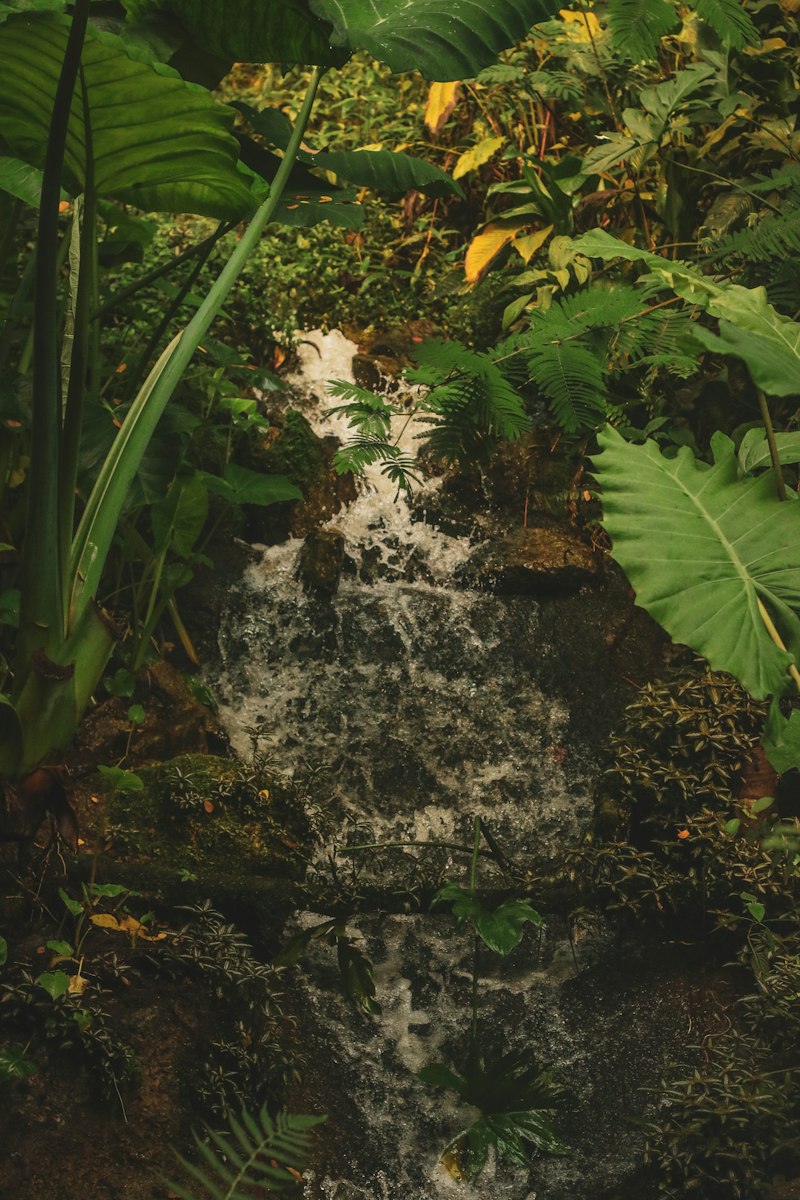
Before the Falls
Do the Nature Playground before the falls. It's a 40-minute guided walk — free with park entry — that climbs through the rainforest on boardwalks and a tree top walk that takes you 30 metres up into the canopy, and ends at rock pools that are the colour of the forest floor. The tree top walk is the single best "how old is this place" moment in the park: you're 30 metres up, the canopy is all around you, and the view down into the treetops is the one photo that shows what a 100-million-year-old forest actually looks like from above.
Then, the ancient rainforest itself. Some of the trees are over 100m — one is over 120m, and it's the tallest tree in the park, easy to find on the Nature Playground loop. Walking under a 100-metre tree is a different experience from walking under any tree you've ever walked under: the canopy is so high the light comes down in columns, and the silence is the kind that makes you check your watch to make sure you're still there.
Timing
Morning for Water, Afternoon for Forest
Morning for the waterfalls. The flow is at its peak in the first two hours after the park opens — fed by overnight and early-morning rain, reduced by the heat of the day — and the light is cleanest before 10:30. Afternoon for the rainforest: the canopy is cooler, the light is softer, and the tracks are quieter. So the sequence: leave Surfers by 8:00, be at the visitor centre by 8:30, do the Nature Playground and one or two falls before 11:00, have lunch, and do the rainforest walk in the afternoon. That's the day, in order.
What to Bring
Pack for the Mountain, Not the Coast
Hiking Shoes
Not flip-flops. The tracks are wet, the steps are steep, and a good pair of trainers will save your ankles on the way down.
Water
One litre per person, minimum. There's a tap at the visitor centre, but the falls have no water on the way.
Sunscreen & Hat
The canopy is a shield, but the tracks between are open, and the mountain sun is direct. Apply, hat on, reapply.
A Light Jacket
It's a full 10 degrees cooler up there than on the coast, and cooler in the morning than it looks. A light jacket is the difference between a comfortable morning and a shivering one.
The Drive Back
Sunset on the Motorway
One last thing: the drive back is the reward. Sunset on the Gold Coast Motorway — the lights of the coast coming on in the distance, the sky doing its thing over the hinterland — is a genuinely beautiful 20 minutes. Leave the park by 4:30 in summer (earlier in winter; the sun sets earlier than you think on the mountain) and the sky will still be doing something on the highway. That's the end of the day: a cold bottle of water, a full tank of stories, and a coast that looks different at dusk.